 Heston's Ap Lang ePortfolio
Heston's Ap Lang ePortfolio

Quarter 1
1. Reflection on the Quarter 1 Theme.

PROMPT: We read Jefferson, Stanton, and King as well as some short articles and rhetorical images on the American Dream this quarter. Challenge, agree with or qualify the major arguments in this Vanity Fair articles, using any of our texts this quarter as evidence.
Answer: I agree with Stanton and King's speech because both authors talk about the freedom and hopes of each individuals including men and women. Stanton readjusts Jefferson's declaration by saying that all men and women are equal. King gives hopes to everyone that will become united and that is the their American
2. Your Quarter 1 columnist Rhetorical Analysis Reflection.

PROMPT: You read 5 editorials from your chosen columnist this quarter. Now that you are familiar with your author, name and analyze two of their-used rhetorical strategies.
Answer: Bill O'Reilly a syndicated Columnist mostly uses Pathos and Logo in his columns. He like to create shifts of emotion in the Atmosphere and he also provides his audience with information and facts.
3. YOUR QUARTER 1 NOVEL, THE GREAT GATSBY.

PROMPT: In his essay "Paradox and Dream," Steinbeck describes Americans as "a restless, dissatisfied, a searching people" (1)--- we dream of buying a home, but once we get it, we're dissatisfied and want something bigger. The Great Gatsby also has a lot to say about Americans and the American Dream. Throughout the novel, we see Jay Gatsby trying to achieve his dreams of wealth and Daisy's love. Tom and Daisy, with their riches and life of leisure, have seemingly achieved the American Dream, but also are described as restless and unsatisfied. George Wilson has started his own business, but is struggling to make ends meet. using at least one example from the Great Gatsby and at least two examples from other works we encountered this semester, show how the authors express this idea about Americans and the American Dream. Do you agree with this perspective? why? what do you think would bring people true satisfaction?
Answer: "...At high tide in the afternoon I watched his guests diving from the tower of his raft, or taking the sun on the hot sand of his beach while his two motor-boats slit the waters of the Sound, drawing aquaplanes over cataracts of foam. On week-ends his Rolls-Royce became an omnibus, bearing partiers to and from the city between nine in the morning and long past midnight, while his station wagon scampered like a brisk yellow bug to meet all trains. And on Mondays eight servants, including an extra gardener, toiled all day with mops and scrubbing-brushes and hammers and garden-shears, repairing the ravages of the night before.”- from the Great Gatsby.
"We hold these truths to be self-evident, that all men are created equal, that they are endowed by their Creator with certain unalienable Rights, that among these are Life, Liberty and the pursuit of Happiness."- The Declaration of Independence.
The two authors express theirs ideas about Americans and the American dream by conveying to their readers that as Americans we can't afford the American Dream because when we gain what we've always wanted such as houses, cars, the ability to always have food on the table and also the ability for parents to keep their on the good path their is a part of us that still feel like we haven't reached to the maximum level so we ask for something bigger. Gatsby had achieved his American Dream from being a person without value to becoming a wealthy man but there was something that was still bothering him. He still wanted more; the joy, love, and peace of the heart not just money. He wanted to have Daisy's love. The declaration of Independence states that we should has the "Life, Liberty, and the pursuit of Happiness". Now Gatsby had the good wealthy life and liberty indeed but he did not have the happiness in his heart.
4. YOUR JEFFERSON- STANTON COMPARISON RHETORICAL ANALYSIS ESSAY.

PROMPT: 2-3 SENTENCE "OATH" REGARDING WHAT YOU WILL STRIVE TO DO IN YOUR NEXT FORMAL PAPER.
ANSWER: In other for me to succeed out of this class I will strive by increasing my ability of writing perfect essays. since I know that my weakness is being able to comprehend and also express myself easily based on what I've read but this time I will work even harder on achieving my goal in learning. I will work better on comprehension, expression of ideas, well written 9 pointer essays, and better analyzing plus using rhetorical strategies in profound ways.
5. YOUR FAVORITE QUARTER 1 40-MINUTE TIMED WRITE.
PROMPT: Briefly reflect on why this was your favorite Timed Write.
Answer: This was my favorite Timed Write because I expressed I understood it very much, my ideas based on the article in my essay mush more better then any other and it felt like my ideas flowed on the paper easily.
"you can view my Favorite Quick Timed Write by clicking the link down below at the bottom of the page"
6. QUARTER 1 REFLECTION.

PROMPT: What did you learn in Quarter 1 AP Lang? What was the most meaningful unit or assignment we did? What did you gain the most from? What did you wish we had skipped? What are you looking forward to (or dreading!) in Quarter 2? What are your Quarter 2 learning goals?
Answer: In Quarter 1 AP Lang I learned many things such as writing a Precis paper, learning how to use the rhetorical Strategies, using the 7 modes of writing, the soap stones, how to break your writing- 9 papers, I also learned on how to grade papers. I've also learned how to write perfect Essays.
I gained the most from all of them and can tell that there will be a difference when I will write an paper which will look different from the ones I would write if I wasn't in AP Lang.
I would skip the reading logs. I looking forward to learning more and being able to comprehend things more easily.
My Learning Goals for Quarter 2 is to become a better writer in essays and anything!
QUARTER 2
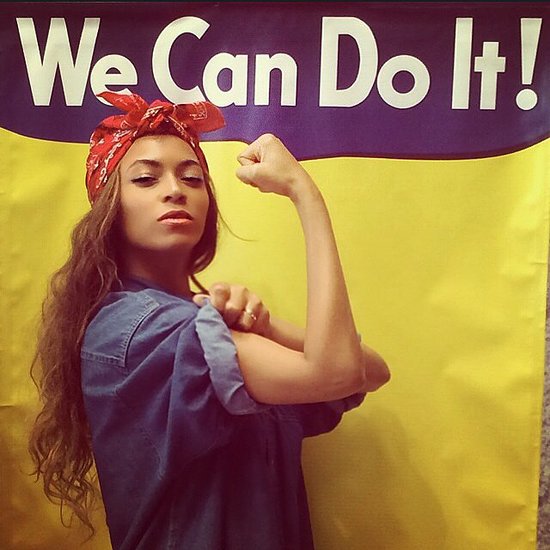
PROMPT: Write a brief (3 paragraph) analysis on at least ONE of the rhetorical/literary devices Hurston uses to advance her theme of either gender or race.
Answer: In the novel "Their Eyes Were Watching God" by Hurston, the author uses pathos to presents to her readers a story of love found again from a woman named Janie, who survives many of her failed relationships but ends up finding true love and independence at the end of a tragedy. The author, Hurston brings her readers into an adventure of love that was unwanted, not returned properly with care but then it was found and seen like a tree bringing forth its fruits. it all began with a woman named Janie, she came back to Eatonville from bearing her dead husband then the rumors and gossip begins to spread in the town. Later on, Phoebe goes to visit her dearest friend Janie. Janie begins to tell Phoebe her past, how she came to this town and her adventure of love with Tea Cake.
She begins on how she was forced to marry a man who was older and unattractive but owned land. Her marriage was unhappy, unpleasant and harsh. she ended up meeting a man named Jody Stark who had a future and a plan for both himself and Janie. He fell in love with her and asked her to come with him to a place far away from home. Jody kept his promises and word- to build a town and to marry Janie. Afterwards, Jody was too involved with the town business and did not give his wife Janie the love and attention she needed as his wife. Janie lost her value of a woman and a wife in which Jody became even more uncaring to Janie.
Jody believed that a woman's place was in the house as he says in chapter five- ”Thank yuh fuh yo’ compliments, but mah wife don’t know nothin’ ‘bout no speech-makin’. Ah never married her for nothin’ lak dat. She’s uh woman and her place is in de home”. From marrying Janie, building a successful town, and to becoming mayor of Eatonville, death certainly was ready to come upon him. Later, Jody fell sick and died harshly but by his death Janie found her freedom and independence again. She felt again how it was to be treated like a woman instead of an object. In chapter nine- "Before she slept that night she burnt up every one of her head rags and went about the house next morning with her hair in one thick braid swinging well below her waist" and from that day on Janie begins to embrace her freedom and independence in which she meets Tea cake and goes on a journey of love that was felt again but sadly she is found in a situation in which she had no choice but to shoot Tea Cake due to a tragic accident.
 PROMPT: You read 5 columns or editorial pieces by your chosen columnist this quarter. Write a brief analysis comparing the editorials looking for the most commonly used rhetorical device that your author uses (1 paragraph). Once you have found the top two favorite devices, write a brief analysis on how the author uses those devices to advance their overall meaning (2 paragraphs).
Answer: During the second quarter, I read five different columns from only one syndicated columnist. My author, David Brooks writes a lot about politics including the Donald Trump and Hillary Clinton campaign and many other topics. From all of the syndicated columns that I have read during the second quarter, the most commonly used rhetorical device that my author uses is Logos. He uses Logos in two of his columns- "Let’s Not Do This Again" and "Does Decision-Making Matter?".
The two favorite devices that the author, Brooks, uses are Logos and Ethos. In the column, "Fellow Trump Critics, Maybe Try a Little Listening", Brooks, uses Logos when he talks about Donald Trump in addressing himself to the Trump critics. He tries to make a point that the people should give Trump a chance to be our president by stopping the critics. The author, Brooks "challenges Donald Trump’s critics and haters to take a break from all of the relentless umbrage to stop and listen to what he has to say. Brooks proposes a new approach on how we view Trump by giving him another chance and also to listen to what he has to say".
In the column, "The Life and Example Of Gwen Ifill", Brooks uses Ethos to talk about his fellow reporter friend, Gwen who recently died. David Brooks creates a column of memories about Gwen's life as a reporter. He tells the world about the Gwen the people will remember. He writes about the friend whom he wants the world to remember as a woman he solemnly describes as ebullient, adored, ambitious with this type of spiritual explosion found inside of her. Brooks says “Gwen’s death merits a bit of the reaction that greeted the death of the writer Samuel Johnson centuries ago: she has left a chasm, which nobody else can fill up and which nobody has a tendency to fill”.
Quarter 2 Synthesis Paper Final Draft

Synthesis Essay: Identity Is Culture
Identity, culture, and race are the three connections that are found in a person but it is likely misinterpreted. I believe that identity is found throughout the cultural attributes and not in the biological sciences. Twins may look alike and sound alike but these certain similarities of appearances do not determine the identification and the outcome of what one might become or act a certain way. This brings up the topic Nature vs. Nurture in which “nature is what we think of as pre-wiring and is influenced by genetic inheritance and other biological factors. Nurture is generally taken as the influence of external factors on conception e.g. the product of exposure, experience and learning on an individual” (Saul McLeod, 2007). So, in this case, A person’s identity is defined according to their environmental attributes and culture for instance; whenever a person is settled in a rebellious environment, they adapt and become rebellious but if a person is settled in a tranquil and decent environment then they will turn out to be reflecting the environment in which they live in and it becomes a part of them.
Mostly when a child is born, of course, they will have a physical resemblance of both of his/her parents and later on in life people will compare the child’s character to either the child’s mother or father. Then the child’s identity will be defined as what the people named his/ her character as. Imagine yourself walking in the streets of New York City and you see an old man who is worn out with a not so pleasant appearance sitting on the ground begging for money. How would you identify someone like him? Would you say that genetics made him this way? Or Is it the environmental attributes? Again in which position do you place yourself in?
There was a boy who was born and raised in the jungle; he becomes a part of that world and a part of the animals that lives there. He, later on, grows up to become an adventurer, an expert in climbing trees and defending himself from the wildlife of the jungle. Of course, the resemblance of both of his parents will always be seen on his body but the person he becomes and the character he projects does not come from his parents but from the environment he lived in. As shown in the image above on the front page, you can see that Tarzan becomes a part of the apes. He eats, breathes and lives like them. Just like a mirror, Tarzan becomes their reflection. http://static.srcdn.com/wp-content/uploads/legend-tarzan-imax-trailer-poster.jpg
Environmental attributes and culture are both the determination and the pathmaker for a person’s true identity which includes the way they are being raised. Being taught a certain way creates a person’s true color based on their surroundings which reflects their character and attitude. ”A very significant portion of studying heredity and environmental effects on human traits and psychopathology is devoted to adoption studies” (Plomin et al., 1997).
Most people say that identity is found throughout a person’s genetics and race while on the other hand many may assume that it is found through environmental and cultural attributes. Both sides might provide evidence to support their claims but which position do you place yourself in? What if Environmental and cultural attributes weren't the only determination of a person’s identity but instead it’s being found in the blood and the bones or in other words the genetics of a person are as it is said: “the apple never fall far from the tree or like father like son”. Speaking of Genetics, most diseases that are part of a person’s personality is found throughout the blood/ genes that have been passed down from family members. For example being blind, having Diabetes, and even being crippled. In the essay On Being Crippled the author, Nancy Mairs tells her audience about her experience from being diagnosed with MS in which she tells us how she felt by saying - “I’m so sick of being crippled…I couldn’t bear the corroboration that those around me were doing in fact what I’d always suspected them of doing, professing fondness while silently putting up with me because of the way I am” (1986). Nancy Mairs felt as her crippleness became who she really was and she had to accept the way she became.
As it is true that environmental attributes and culture are both path-makers for a person’s identity, genetics are still in competition but that does not make us change our belief. Our biggest problem is race since many people believe that their true identity is found on the color of their skin; just like black people and Arabs are viewed as criminals and Latinos are viewed as drug dealers. But let’s not accept the characterization given to us by the what people think of us but as who we are truly are ourselves. An author once said “But I am not tragically colored. There is no great sorrow dammed up in my soul...I do not mind at all...No, I do not weep at the world- I am too busy sharpening my oyster knife...Someone is always at my elbow reminding me that I am the granddaughter of slaves. It fails to register depression with me. Slavery is sixty years in the past… and I must not halt in the stretch to look behind and weep. Slavery is the price I paid for civilization...” (Zora Neale Hurston, 1928). In the essay How It Feels To Be Colored Me, the author Zora Neale Hurston refuses to position herself as a granddaughter of slaves who would still have the feeling of oppression in her, to be judged and to also be characterized by the world but instead she embraces her personality and character. She accepts who she is and expresses it with joy. “...I have no race, I am me. When I set my hat at a certain angle and saunter down seventh Avenue, Harlem City, feeling as snooty as the lions…” (Zora Neale Hurston, 1928).
So overall, Identity, race, and culture can all be part of a person’s life for they all are found within them. But gender and race can not properly define a person’s identification because they are not based on social interactions or characteristics. A person’s identity reflects the type of environment they live in and not just what is found in their blood. There is no existence of “like father, like son” or is there- “The apple never falls far from the tree”. It is all within the air we breathe, the food we eat, the people that surround us, the climate were are in, and the way we decide to project ourselves towards the world. It is simply an adaptation. It is just the works of the environment and the culture.
Sources:
How It Feels To Be Colored Me
Author: Zora Neale Hurston
Year: 1928
On Being Crippled
Author: Nancy Mairs
Year: 1986
http://www.personalityresearch.org/papers/haimowitz.html
Author: Plomin et al.
Year: 1997
http://www.simplypsychology.org/naturevsnurture.html
Author: Saul McLeod
Year: 2007
Tarzan image: http://static.srcdn.com/wp-content/uploads/legend-tarzan-imax-trailer-poster.jpg
Quarter 2 Synthesis Paper Reflection

SELF ANALYSIS
Your Formal Synthesis Paper
Orientation | Claim | Evidence | Commentary
-
What is the number of sentences your paper has?____47______________. Commentary on this number:
The number of sentences seems a lot but not as much.
-
MAKE ALL YOUR ORIENTATION BOLD. How many of those sentences are orientation; establish context (you don’t always need these)? ______1________. Commentary on orientation:
Now as I look back to see if I have any orientation on this essay I see that I orientation can be described as poor because I only have one.
3. UNDERLINE ALL OF YOUR CLAIMS. How many of your sentences are claims? __20_____. What percent of the total is that? __20_____% (Note: work to make your claims insightful, rather than simplistic as “Jefferson uses ethos to make his point”). Commentary on claims: Talk about the numbers and how insightful your claims are.
The numbers of claims are pretty consistent.
4. HIGHLIGHT ALL OF YOUR EVIDENCE IN YELLOW. How many of your sentences provide specific detailed evidence? ___4___________. (Note: separately count those that are paraphrased or summarized). _____3_______. How many of that total number of quoted and paraphrased evidences have an in-text citation and corresponding works cited page citation?_____3_______. What percentage of the total are your sentences of evidence? _____7____________% Commentary on evidence: reflect on the numbers above and the specificity of the evidence.
Normally in a synthesis essay you need to have at least three sources to back up your claim and so I think that at least 7 evidences/ sources is enough to backup my claim.
-
HIGHLIGHT ALL OF YOUR ANALYSIS IN GREEN. How many of your sentences provide commentary/analysis on the evidence that was offered? _____7_______ What percentage of the total are your sentences of commentary? ____7_________% (Note: one sentence will seldom be enough; work on having at least two sentences of commentary/analysis for each chunk of evidence). How many times do you provide at least 2 sentences of commentary/analysis about a chunk of evidence? __n/a____________. Commentary on the number and style of commentary/analysis:
6. Analyze yourself. What directions do you need to take on your next timed or formal write?
I think I did pretty fine on my synthesis paper but I think I just need to improve more on my ideas and vocabulary.
SYNTHESIS PAPER SOURCES SELF ANALYSIS
Of the following list of required sources, please name the sources you ended up using in your paper:
REQUIRED SOURCES YOUR SOURCES: title, author & genre (TAG) of the work 1. Any of the essays we read in class this quarter including Steele’s “On Being Black and Middle Class,” Rodriguez’s “Aria: Memoir of A Bilingual Childhood” or “Blaxicans,” and Hurston’s “How It Feels To Be Colored Me.”
“How It Feels To Be Colored Me”
Zora Neale Hurston
Novel
2. Any two of the other essays for Quarter 2 including: “Indian Education” by Sherman Alexie (The Bedford Reader) “Once More to the Lake” by E.B. White (The Bedford Reader) “Notes of a Native Son” by James Baldwin (50 Essays: A Portable Anthology) “Social Cesspool Polluting Youth” by Laura Schlessinger (Readings for Writers) “Don’t Blame the Parents; It’s Mainly the Peers” by Judith Rich Harris (Readings for Writers) “Only Daughter” by Sandra Cisneros (The Bedford Reader) “On Being Cripple” by Nancy Mairs (50 Essays: A Portable Anthology)
“on Being Cripple”
Nancy Mairs
Essay
3. A Current Online Article from a credible source http://www.personalityresearch.org/papers/haimowitz.html http://www.simplypsychology.org/nautrevsnurture.html
4. A Journal Article from the PGCPS SIRS Database
none
5. A Visual Text that demonstrates a visual argument either for or against your thesis.
http://static.srcdn.com/wp-content/uploads/legend-tarzan-imax-trailer-poster.jpg
6. OPTIONAL: Their Eyes Were Watching God by Zora Neal Hurston none
7. OPTIONAL: Personal anecdote/Narrative of personal experience (NOTE: You may only use this once, unlike our essayists Steele and Rodriguez who use personal narrative as logos throughout their essays). none SYNTHESIS PAPER REFLECTION In at least 3 paragraphs, reflect on the process of writing your formal synthesis paper. Consider some of the following topics:
Prompt: Did your essay respond to the prompt (What defines a person’s identity: their race and/or gender (physical or biological attributes) or their culture (environmental attributes)?
Sources: Did your essay use the required number and diversity of sources? Did you feel comfortable using a visual source? Did you go above and beyond the source requirements? If so, how and why?
Research: What did you learn about the process of researching? Are you confident that your sources are all reliable? Why or why not? MLA Style: What did you learn about MLA style? If you were assigned another MLA style research paper, would you be comfortable with the in-text citations, formatting, and works cited page? If yes, what did you learn about MLA through this assignment that you didn’t already know? If no, what would you need to review or learn in order to feel comfortable?
Writing: What was easy about writing the synthesis paper for you? What made you feel the most confident? What was challenging? What made you feel like you weren’t quite sure how to proceed? Were you confident that you organized your essay into a logical coherent essay? Why or why not? Of the three main sections of the synthesis paper (argument, counterargument, rebuttal), which was easiest for you? Hardest? Why?
Quarter 2 Reflection

PROMPT: What did you learn in Quarter 2 AP Lang? What was the most meaningful unit or assignment we did? What did you gain the most from? What did you wish we had skipped? What are you looking forward to (or dreading!) in Quarter 3? What are your Quarter 3 learning goals?
Answer: In Quarter 2 AP Lang, I learned a lot of new techniques and methods of writing essays. I learned how to write a well written 9 pointer essay such as writing synthesis quick time write essays and how to grade them. I've learned how to differentiate the a 5 and 6 pointer essay and also a 8 and 9 pointer essay. The most meaningful assignment we did was the Synthesis paper because I really brought my attention to figure out some realities of the world. It got me thinking on how a person's identity is found. I've seen how the people I know get transformed into beings I never thought they would be. I seen foreigners who were innocent beings turn into the word culture itself. They have adapted to the new environment introduces to them because it wasn't the DNA found within their blood that determined who they were but the nature that surrounded them. I gain the most from the Synthesis paper. I wished we hadn't skipped anything because it was all very helpful even though it was a lot of work to do. It was all a step by step process that led me a successful outcome. I am looking forward to reading more novels as a class during the third quarter. My third quarter learning goals are to succeed in every essay and to understand easily what is being taught. This experience of the second quarter was a like a tunnel in which you had to have a long walk but the end of that tunnel you know of course their will always be light.

